A Month in the Workshop: Getting the Car Right for the Next Round
The first thing we do when the car comes back to the workshop from a rally is give it a clean. Partly that's pride — it's nice to have a presentable car — but mostly it's detective work. A whole heap of mud can hide something that's going to become a problem at the next event, so we need to see every part of the car clearly: the wishbones, the suspension, the control arms, the sway bars, all of it. You can't check what you can't see, so the wash is where prep really begins.
Not every event leaves its mark. We've had rallies where we've literally rolled the car off the trailer, given it a good wash, put it in the workshop, changed the fluids, and that's the job done. The last rally was not one of those. We hit a tree stump with the front right of the car — a proper hit — so all the front panels had to come off, the bonnet had to come off, the bumper had to come off, and we had to visually check exactly what state the car was in underneath. Once those panels were off, we finally had a good look at the lower control arm, the suspension, the steering rod — everything that connects up to the hub assembly on that front right corner. After a hit like that you trust nothing until you've eyeballed it and bolt-checked it. The whole game between rallies is catching the thing that could fail before it fails on a stage, and telling the difference between damage that's only cosmetic and damage that could end your next event.

Beyond fixing what's broken, there's a routine that happens to the car regardless of how the last rally went. Brakes, drivetrain, fluids, a careful look for oil leaks — just running through the car's systems to make sure they're all still healthy. Fuel pumps, the intercooler pump, radiator hoses, the radiator itself, all checked and confirmed in working order so we don't carry an unnecessary failure into the next event. It goes right down to the small things too: making sure the intercom works and the batteries for the in-car cameras are good. And if we find something that could be a genuine improvement while we're in there, we carry that improvement through. The rally itself writes half your prep list.
A good example is a small one that stung. We run an audio link from our intercom into one of the cameras so people can hear the pacenotes when they watch our videos on YouTube — and last rally it came unplugged. The visuals were all there, but the audio was wrecked, and we lost a lot of really interesting conversation. It was one of the best rallies of the year: a thirty-kilometre night stage, the tree stump, all these moments that would have made such colourful additions to the videos — and we missed the lot. That's now firmly on the "never again" list for how we set the car up.
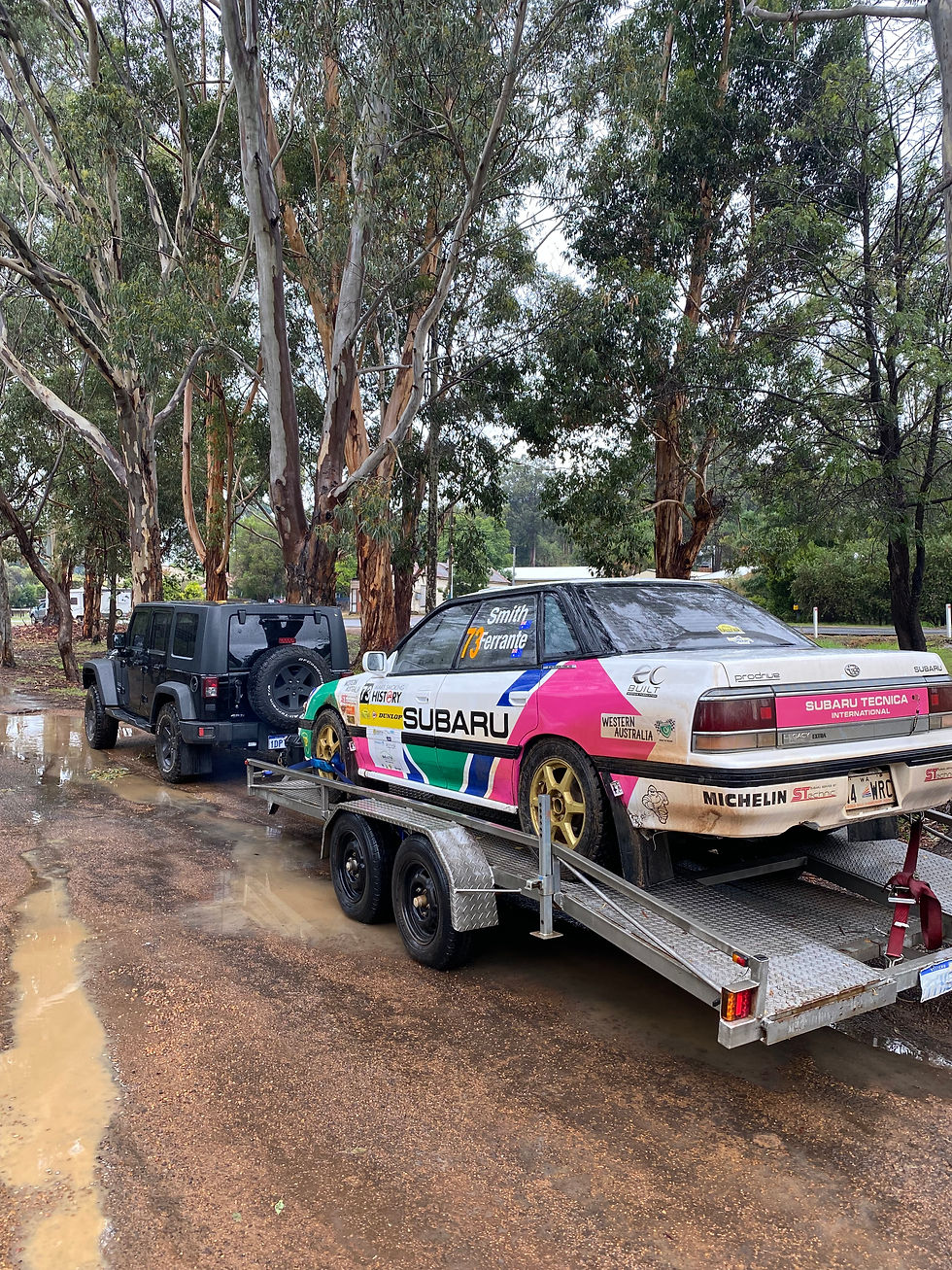
Once all the prep is done, the car's back together, and I'm driving it up onto the trailer for the next one, there's a foot in each camp. There's confidence, and there's the quiet hope that I've done everything correctly. Working on the car is therapy for me — I love it with all my heart — but I'm not a qualified mechanic. I'm out there doing it because I'm passionate about it, leaning on friends who've been so good to us. The community around this sport, where everybody helps everybody, is second to none. What you carry to the start line is the knowledge that you've done your absolute best with the finances and the resources you've got. That's where the sense of achievement comes from when the car rolls back onto the trailer: the month of hard work between each rally is well and truly worth it.


Comments