The Rally Behind the Rally: Logistics, Fuel and the Service Crew
By the time the car crosses a start line, the hardest logistical work of the weekend is already done. People imagine a rally as the stages — the flat-out runs through the forest — but for a privateer team like ours, the real puzzle is everything that has to happen just to get the car, the crew and enough spare parts to a paddock that's often hours from home. The competitive part is the tip of the iceberg. The rest is planning, packing, towing and problem-solving.
It starts with transport. The car goes on the trailer, and behind the tow vehicle goes what is effectively a travelling workshop: tools, a spares inventory built from hard experience, jacks and stands, spare wheels and tyres, and the consumables you only miss when you haven't packed them. Deciding what to bring is its own art. Take too little and a small failure ends your weekend; take everything and you're hauling a workshop you'll never fully use. So you pack for the failures you can actually fix at an event — suspension components, belts and hoses, fluids, fasteners — and you make peace with the ones you can't. Every team's trailer is a story of the things that have gone wrong before.
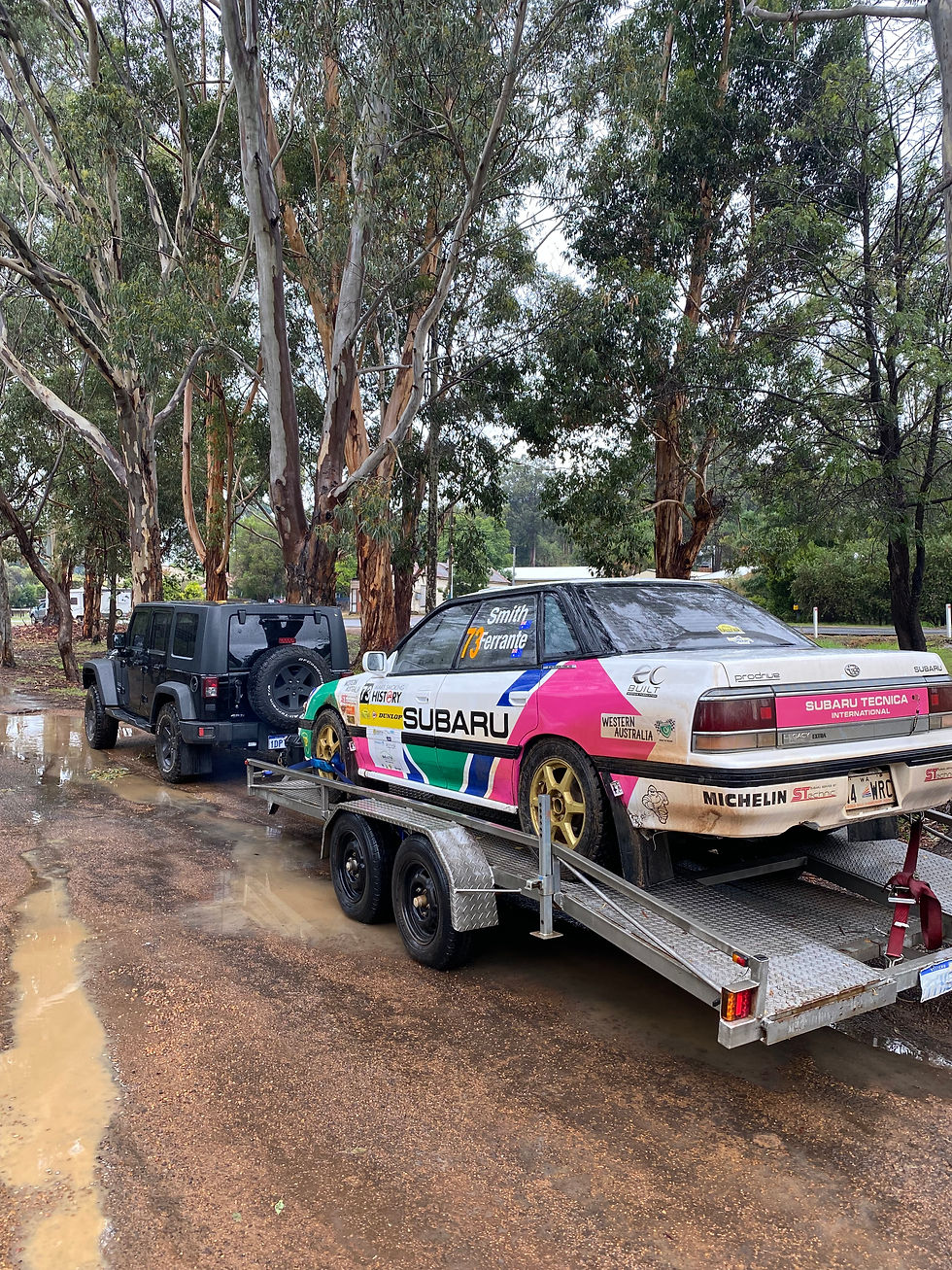
Then there's fuel, which is less glamorous than it sounds and more important than most spectators realise. You're planning how much the car will drink across the competitive stages and the road sections between them, in a part of the world where you can't assume there's a servo around the corner. You carry what you need, store it safely, and manage it across the day so you never roll into a stage light. Get the sums wrong and it doesn't matter how quick the car is.
The heartbeat of the whole operation, though, is the service crew. In the tight windows the regulations give you — a set number of minutes in the service park between loops of stages — a small group of people has to receive a hot, hard-worked car, go through it, fix what needs fixing and turn it back out on time. For a team like ours, that crew is made up of friends and volunteers who give up their weekends because they love it, not because they're paid to. They are the reason a two-person crew can compete at all. The community around this sport, where everybody helps everybody, is genuinely second to none, and nowhere is that clearer than in a service park with the clock running.
So when you see a rally car appear at a stage start, clean-ish, fuelled and ready, know that it represents a small mountain of unseen effort: a trailer packed with the right guesses, a fuel plan that adds up, and a group of people who got up before dawn to make sure the machine is ready to be driven hard. The stages are where the results are won — but the rally behind the rally is what makes getting to them possible.


Comments