Two Brains, One Car: The Bond Between Driver and Co-Driver
People watch a rally car go past and see one person driving. What they don't see is that a rally is run by two brains working as one. The driver has the wheel, but it's the co-driver who owns the road ahead — reading it out, corner by corner, faster than the eye can take it in. For that to work at any real speed, the trust between the two of you can't be a nice-to-have. It's the whole foundation the drive is built on.

You feel it most clearly in the pacenotes. We run descriptive notes — words like absolute, medium and bad rather than numbers — and the reason that system works is trust. When Kirsty calls "absolute, crest, okay" and I can't see over the crest, I don't lift. I put my foot in as far as it'll go, on a road I can't yet see, purely because I believe the word she's just given me. That's an extraordinary thing to hand another person. And it's not just the words — it's hearing in her voice that she means it. There's a tone that tells you you can really go for this one, and after enough stages together you stop hearing the words and start hearing the certainty behind them. That doesn't arrive on day one. It's built, note by note, over a lot of kilometres — and it's why a new co-driver takes a while to bed in, and why you back off a touch until the confidence is mutual.
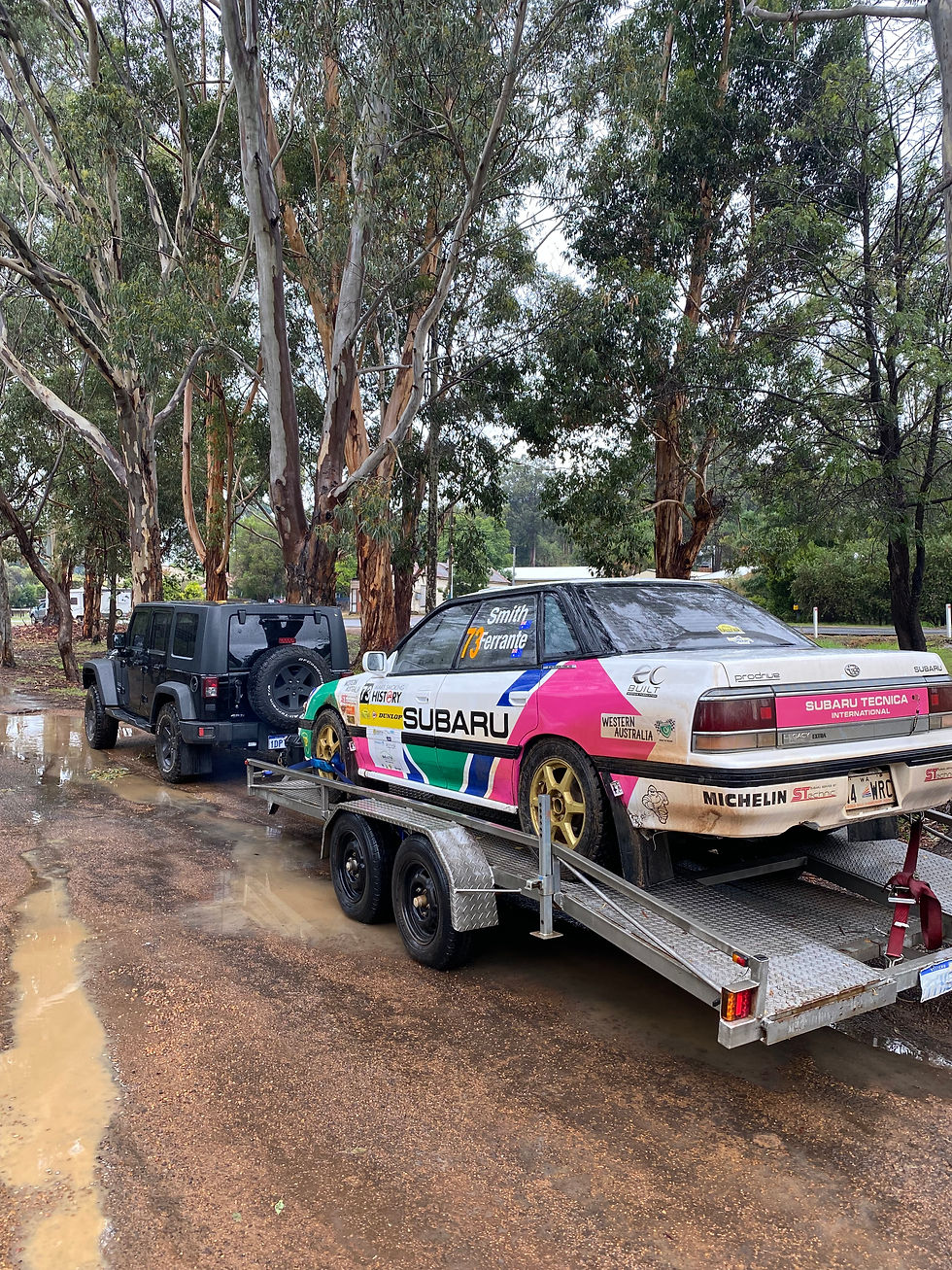
The notes are only half of it, though. The bond gets forged just as much in the quiet weeks between rallies as it does on the stage. The car that Kirsty trusts to sit in at speed is a car we get ready together, leaning on the same tight circle of friends who help us pull panels off after a hit and bolt-check a corner until we know it's right. When you've both had your hands on the machine, cleaned the mud off it looking for problems, sorted the niggles from the last event, there's a shared investment in it. She's not putting her faith in a car she's never met — she's putting it in our car, prepared as well as we know how. Trust in the crew and trust in the machine turn out to be the same trust.
That's the part that's hard to explain to people outside the sport. It's not bravado and it's not recklessness — it's two people who've done the work, on the car and on the notes, deciding together how brave to be. The driver commits, but only because the co-driver has given them something solid to commit to. And when it clicks — when the call, the voice and the car all line up and you crest something flat-out on faith — there's no feeling quite like it in motorsport. One car, two brains, and a bond you can only build one stage at a time.


Comments